Minor Arcana · Pentacles · Number 5
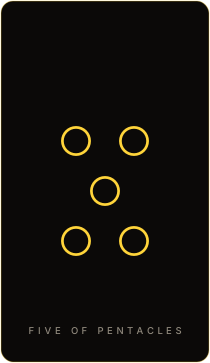
Five of Pentacles
Hardship in the suit that keeps the books — money gone, health failing, the outside of a system others are inside. Real cold, honestly drawn. And the card's terrible geometry: the lit window is right there. Look up; the asking is the skill this winter teaches.
the lean season, snow that is not a metaphor, the lit window unseen, pride as bad insulation, two sets of footprints, help nearer than it looks
Upright
Five of Pentacles upright meaning
The Five of Pentacles is the suit's winter, and the card's first decency is that it does not decorate the season. The snow is real snow. This is the card of money actually running out, of the body actually failing, of standing outside systems — employment, insurance, family, belonging — whose insides one can see through the glass. The two figures are drawn without romance: one wounded, one freezing, both moving because stopping is worse. If this card has arrived, something material is genuinely hard right now, and the deck says so plainly, first, before anything else — because people in this weather are told constantly that it could be worse, and the card's opening mercy is the opposite sentence: it is cold. You are not imagining the cold.
Then the card commits its famous cruelty, which is geometric: the window. Lit, gold, warm, close enough to throw a snowball at — and unseen. Neither figure looks up. This is the Five's central observation about hardship, and it is clinical, not moralizing: cold narrows. Scarcity — of money, of health, of hope — collapses the field of vision down to the next three steps of snow, which is efficient for surviving tonight and catastrophic for ending the winter, because the exits are almost never located in the next three steps. They are up, and to the side, and behind glowing glass — the friend who would help if asked, the program built for exactly this, the family that assumes you would call, the hardship fund nobody applies to. The help in this card is not hypothetical. It is rendered, in gold, at head height. The tragedy is angle of gaze.
Why don't they look up? The card knows, and its answer is the shawl: pride, and its quieter sibling, shame. Not looking is not oversight — it is policy. Asking would confirm the fall; walking on is the last form of standing. And the figures have each other, which cuts both ways: companionship in hardship is real wealth — two sets of footprints halve the wind — but two people can also co-sign each other's story that there is no door, that the light is for others, that we don't ask. The most weatherproof thing in the whole image is that belief. Snow melts. Not for me can last for years.
So the counsel is a single motion, and it costs more than it looks: lift the gaze. Inventory the windows honestly — the specific person, the specific program, the specific sentence (I'm not okay; I need work; I can't cover this month) — and then perform the act this card exists to teach: ask, precisely, someone who can actually help. Asking is not the opposite of dignity; it is dignity's winter form — the skill of the person who intends to survive intact. And the card keeps one note of hard comfort for the road: this is a five, the suit's middle. Winters in the earth suit are seasons, not verdicts; the ground under that snow is the same ground that grew the garden of the Nine, and it is not gone. It is dormant, and it keeps the dates better than despair does.
At work
Cold narrows to the next three steps; the exits are never there — they're the specific person, the specific fund, the specific sentence asked out loud. Lift the gaze before the pride refreezes.
In love
Two sets of footprints halve the wind — but don't co-sign each other's "there is no door." One of you looking up is enough to find it for both.
In you
It is cold; you're not imagining it — that's said first. Then: asking is dignity's winter form, the skill of someone who intends to survive intact.
Note: Not a verdict — a five, the suit's middle; a season on ground that still keeps dates. And not the absence of help: the window is rendered in gold. What's absent is the upward glance.
Reversed
Five of Pentacles reversed meaning
The winter breaking — help asked for and received, the door located, the numbers turning survivable. Recovery in the suit that counts. Two homework items travel with it: believe the warmth, and remember the window — someone else is walking past it right now.
Reversed, the Five of Pentacles is the door — found, opened, walked through — and the card allows itself the suit's rare good news without irony: the job offer after the long gap, the treatment that works, the loan restructured, the family's help accepted at last, the sentence I need help spoken and answered. The recovery is usually traceable to one unglamorous act: someone looked up. The window had been there; the program had been there; the friend had been there. What changed was the angle of a gaze, and then the swallowing of the shawl-pride, and then the ask. The reversal is the receipt for that transaction, and it wants the mechanism remembered, because winters recur and the skill is reusable: the exits were never in the snow ahead. They were always in the glass beside.
But the card follows its figures indoors, because it knows what veterans of lean seasons know: the body comes inside faster than the nervous system. One of the figures sits by the stove without believing in it — still budgeting the soup, still flinching at the knock, still running the outside math in an inside room. This is the cold carried indoors, and it deserves patient, specific handling rather than cheer: scarcity that lasted long enough became an operating system, and operating systems do not uninstall on the day circumstances change. The homework is small and physical, like the suit prefers: spend one comfortable sum and watch nothing collapse; leave the heating on; say yes to the second helping. The warmth has to be experienced past the flinch, repeatedly, before the hands finally unclench — and the card is gentle about the timeline. Thaw is slower than rescue. It is still thaw.
And then the reversal turns its figures around, physically, to face the glass from the inside — because the card has one more instruction, and it is the whole ethics of the suit in a single image: from in here, you can see them. The window that was invisible from the snow is transparent from the warmth, and someone is walking past it right now, eyes down, in exactly your old footprints. The person who has been outside owns a rare asset: they know precisely why the walkers don't look up, which means they know how to open a door without making it cost pride — the offer made concrete instead of vague (Tuesday, I'll drive you rather than let me know if you need anything), the help framed as normal, the asking made unnecessary. Most of the warm world never learns this skill because it has never needed the door. You have. The Five reversed, at full depth, is not just the end of your winter. It is the beginning of your tenure on the other side of the glass — stoker, door-opener, the one who remembers the snow with working memory. The suit will hand you the Six next, with its scales and its coins going hand to hand, and it will expect you to have done this homework.
At work
The recovery traces to one act — someone looked up and asked. Keep the mechanism: exits are never in the snow ahead, always in the glass beside. Reusable in every winter.
In love
Help accepted is a bond, not a debt — but thaw the nervous system on purpose: one comfortable yes at a time, past the flinch, until the hands unclench.
In you
The body comes inside faster than the mind. Scarcity became an operating system; uninstall it in small physical acts — the heating on, the second helping, nothing collapsing.
Note: Not instant — thaw is slower than rescue, and still thaw. And not private: from inside, the window is transparent. Someone's in your old footprints right now; make the offer concrete.