Minor Arcana · Pentacles · Number 8
Eight of Pentacles
Skill under construction — the reps, the drills, the drafts, the same motion refined by attention until it becomes mastery. Deep work chosen over the city's noise. Unspectacular from outside, compounding from inside. Protect the bench hours; check each coin against the last.
the same star carved again, repetition with attention, the bench far from the city, hours nobody applauds, the plateau where skill lives, each coin checked against the last
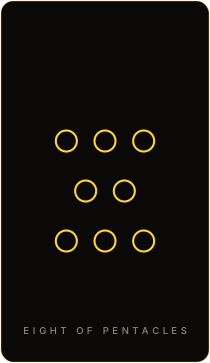
Upright
Eight of Pentacles upright meaning
The Eight of Pentacles is the deck's monument to the least marketable virtue: repetition. Eight coins, one star, the same motion again and again — and the column of finished pentacles hanging beside the bench tells the card's whole story to anyone who looks closely, because they are not identical. The early ones are honest and slightly wrong; the recent ones are cleaner; the one under the chisel right now is being carved by hands that the previous seven built. This is the card of skill in its unglamorous manufacturing stage: the scales practiced, the drafts written, the code reviewed, the swing repeated in the empty gym. If it has arrived, the reading contains an apprenticeship — formal or private — and the card's message is the tradesman's blunt encouragement: you are in the right place, doing the right thing, and it is supposed to feel like this.
The card's first precision is the difference between repetition and drudgery, because the motions look identical and are opposites: attention. Drudgery repeats the motion; craft repeats the motion while watching it — carve, compare against the last coin, adjust, carve again. The loop is everything. A thousand mindless repetitions produce a thousand-and-first; a thousand attended ones produce a craftsman. This is why the finished coins hang where he can see them rather than in a drawer: the column is not vanity, it is instrumentation — the visible record against which today's work is checked. The counsel hiding here is practical: make your repetitions comparable. Keep the drafts. Log the sessions. Yesterday's coin is the only honest teacher of today's.
The city in the background is the card's second argument, and it was left there deliberately: skill is made in exile from the noise, and the exile is chosen daily. The city holds everything that competes with the bench — the discourse, the networking, the performance of working, the ten small urgencies that feel like productivity because they involve motion. The craftsman moved out past the walls, and the card notices what he gained: the compounding hours the city-dwellers never string together. Mastery's actual price is not talent; it is consecutive, protected, boring time — and the Eight's most useful modern translation is calendar defense: the bench hours held against every polite invasion, because a craft is built in exactly the hours that nothing defends by default.
And the card knows about the plateau, which is where most apprenticeships die. Progress in any real skill arrives in stairs, not slopes: brief thrilling climbs, then long flats where the reps continue and the coins stop improving visibly — and the flat is where the crowd quits, which is the whole secret of why mastery is rare. The Eight's craftsman is drawn mid-plateau, head down, still carving, and the card's deepest promise is addressed exactly there: the plateau is not the absence of progress; it is where progress consolidates, in the hands, below awareness, exactly like the Seven's roots grew below ground. Love the plateau — or at least outlast it — and the next stair arrives on its own schedule, made, it always turns out afterward, of all those flat and faithful coins.
At work
The reps with the loop attached: do, compare against yesterday's coin, adjust. Keep the drafts visible — the column is instrumentation, not vanity. And defend the bench hours; nothing defends them by default.
In love
The long skills — repair, listening, patience — are carved the same way: same motion, attended, repeated. The plateau in a bond isn't stagnation; it's where the practice consolidates.
In you
It's supposed to feel like this: unspectacular outside, compounding inside. You're mid-staircase on a flat step. The crowd quits here; that's the entire secret of why mastery is rare.
Note: Not drudgery — the difference is the watching, and it changes everything downstream. And not the city's performance of work: motion isn't progress. Progress is the eighth coin, checked against the seventh.
Reversed
Eight of Pentacles reversed meaning
The work continuing without the worker — quality slipping where it doesn't show yet, the job done to spec and dead. Or perfectionism hoarding one coin forever. Or the why gone from under the walls. Recover the care in one small act — or admit this was never your star.
Reversed, the Eight of Pentacles is the bench with the attention gone, and its first face is the most common and the hardest to catch: autopilot. The hands still move; the output still ships; the spec is still met — and the loop is dead. No comparing, no adjusting, no watching: the eighth coin is identical to the seventh, which is identical to the sixth, and identical, in a craftsman, is the sound of something stopping. Quality slips first where it doesn't show — the unglamorous underside, the test not written, the edge case waved through — because care was always what covered the parts inspection can't reach. The card's warning is about the timeline: this face is invisible for months and structural forever. And its diagnostic is simple: when did the work last surprise you into doing it better? If no answer comes, the chisel is being held by nobody.
The second face reverses the failure: care with no shipping attached. The one coin polished for its fortieth pass, the project at ninety percent for a year, the column empty because nothing is ever finished enough to hang. This is perfectionism, and the card declines to flatter it as high standards: the upright craftsman's coins improve because they are completed — the loop requires a finished attempt to compare against, and the polisher has quietly opted out of the loop, and therefore out of improvement, by never producing a comparable unit. One coin forever is not mastery; it is hiding, at the bench, from the verdict of the next coin. The prescription is mechanical and merciless: ship the coin at good enough, start the next one, and let the improvement happen where it has only ever happened — between attempts, never within one.
The third face is the quietest: the why gone from under the work. The craft was chosen by an earlier self, or by parents, or by a market that has since moved; the skill is real, the years are real, and the star being carved means nothing to the carver anymore. Here the reversal deserves careful hands, because two conditions look identical from inside the fatigue: the plateau, which is boredom that precedes the next stair and should be outlasted — and extinction, which is the care gone because the object of care was never yours. The differential is the flicker test: put the tools down for a week, then pick them up. The plateau greets you with reluctant familiarity that warms within the hour. Extinction greets you with dread that deepens. If it is the plateau — return to the bench; the stair is close, and quitting here is the oldest mistake in the suit. If it is extinction — the card gives permission the guilt has been withholding: the hands trained on this star transfer; craftsmanship is portable and only the emblem changes; and eight coins into the wrong vocation is early, whatever the sunk years whisper. The Seven already taught that arithmetic. This card only adds: the bench itself was never the problem. Care is looking for its object. Let it look.
At work
When did the work last surprise you into doing it better? No answer = autopilot; quality is slipping where it doesn't show yet. Recover the loop on one small unit today.
In love
The bond maintained to spec and dead — motions correct, watching gone. One act of actual attention, small and specific, restarts what the routine only imitates.
In you
Plateau or extinction: put it down for a week, pick it up. Reluctant familiarity that warms = stay; the stair is close. Dread that deepens = the hands transfer; only the emblem changes.
Note: Not laziness — the hands are moving; the watcher left. And not high standards, the fortieth polish: improvement lives between attempts. One coin forever is hiding from the next.