Minor Arcana · Cups · Number 9
Nine of Cups
The wish card — the thing wanted, arrived; satisfaction that can be sat in front of, publicly. Emotional plenty after the suit's long road. Enjoy it without apology; the only clause is fine print about the difference between having and tasting.
the wish granted, satisfaction owned, contentment on display, emotional plenty, the host of his own happiness, enough experienced as enough
Upright
Nine of Cups upright meaning
After the departures and marshes, the suit arrives somewhere warm: the Nine of Cups is the tarot's yes. The wish card, tradition calls it — the interview passed, the offer made, the health scare cleared, the season where wanting and having briefly hold hands. Its first message is the one satisfied people most need and least receive: you are allowed. Allowed to have it work out, allowed to be visibly pleased, allowed to sit in front of the arc of cups with your arms crossed and no disclaimer prepared. Contentment has a bad reputation among the ambitious and a worse one among the guilty, and this card, arriving, functions as a permission slip against both: what arrived was wanted honestly and worked for honestly, and enjoying it out loud completes the transaction. Joy unexpressed, like credit deflected, quietly insults everyone who helped carry it here.
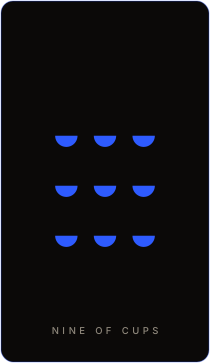
But the card was painted by someone with a sense of humor, and the fine print is in the furniture. The nine cups sit on the high table behind the man — displayed, arced, dusted — and he sits on a plain bench in front of them, drinking from none. The image permits two readings and insists you check which one is yours. In the first, the man has drunk deeply and is resting in the afterglow: having become being, arrival metabolized. In the second, the cups have become a shelf — satisfaction curated for the audience, the wish granted and then immediately converted into display inventory: the relationship maintained for its photographs, the achievement referenced but no longer felt, happiness as a hosting duty. Same furniture, opposite lives. The diagnostic is private and takes one second: when did you last actually taste one of the nine?
There is also, in the man's crossed arms, a gentle warning about sufficiency's edge. Nine is not ten; this card's plenty is personal, not yet shared into structure — that is the next card's work. Satisfaction can round itself up into smugness, the crossed arms hardening from contentment into a small fortress against wanting anything further, including other people. The Nine at its best is a pause, not a policy: the wish granted is a place to sit, gratefully, briefly — not a bench to defend.
Still: those readings are the fine print, and the headline remains the headline. Something you wished for has arrived or is arriving. Sit down in front of it. Cross your arms if you like. You built the arc; the least you can do is let it hold your weight for an evening.
At work
The win landed — enjoy it in public without disclaimers; deflected satisfaction insults the helpers. Then check: still tasting it, or already curating the shelf?
In love
Wanting and having holding hands — the relationship in a genuinely good season. Feel it rather than photograph it; the display case is the only threat in frame.
In you
Permission for contentment, unapologized. And the one-second audit: when did you last actually drink from one of the nine? Having and tasting are different verbs.
Note: Not the finish — nine is not ten; plenty unshared is a bench, not a home. And not smugness yet: crossed arms are rest, until they become a wall.
Reversed
Nine of Cups reversed meaning
The wish granted and wrong — or granted and unfelt, displayed and untasted. Satisfaction performed for the room, appetite grown past every sufficiency, the toast that echoes. The question underneath: what was the wish actually for?
Reversed, the Nine of Cups is the wish card with the wish gone wrong in one of three ways — got it and it's hollow, got it and can't feel it, or can't stop getting.
The first is the classic: careful what you wish for, delivered. The pursued thing arrived intact and turned out to be an answer to a question you had stopped asking — the promotion built for a self two versions ago, the trophy relationship, the arrival that satisfied everyone's expectations but the wisher's. This is disorienting precisely because nothing failed: the machinery of wanting worked perfectly on obsolete blueprints. The card's counsel is to run the autopsy without shame, because the finding is valuable: what was the wish for — what feeling was it hired to produce? The wish was a proxy; proxies drift; the underlying want is usually still alive and can be re-contracted to a truer vendor. Wishes are employees, not identities. This one can be let go.
The second is anhedonia at the banquet: the nine cups present, verified, objectively full — and the taste missing. Life enviable on paper and flavorless on the tongue. Here the reversal is tender rather than ironic, because the fault is not in the cups and the fix is not another acquisition. Tasting is a capacity, and capacities are depleted by exactly the campaigns that fill tables — the years of deferral, the attention spent wholly on getting, the habit of experiencing each arrival only as the launchpad for the next want. The repair is small and physical: one cup, one sitting, no phone, no audience, no simultaneous planning. Satisfaction is a skill with muscle memory. It returns with practice, and it only practices in the present tense.
The third is the broken arc: sufficiency breached by appetite. Nine cups reading as almost ten, ten as almost twelve — the moving target, the extra clause, more as a reflex rather than a decision. The reversed Nine names the pattern with unusual bluntness: past a certain point, acquisition is not desire but its malfunction — wanting's needle stuck, hoarding the symbol because the felt thing never arrives. The test is simple: has any quantity, ever, produced the sensation the next quantity is promising? If no — and it is no — then the next cup is not the missing piece; the missing piece is the sitting down. The bench in the picture is never removed, in either orientation. It waits, plain and load-rated, for the man to stop building the shelf.
At work
The promotion built for a prior self — nothing failed; the blueprint was old. Autopsy the wish: what feeling was it hired to produce? Re-contract that, not the title.
In love
The trophy bond, maintained for its photographs — or full cups you can't taste. One evening, one cup, no audience. Tasting is a muscle; it practices only in present tense.
In you
The needle stuck on more. Ask it plainly: has any quantity ever delivered what the next one promises? The missing piece is the sitting down.
Note: Not proof wishing is futile — proof the wish was a proxy. The want under it is alive and re-hirable. And the bench is still there; it was never the shelf.