Minor Arcana · Wands · Number 5
Five of Wands
Friction, not war. Competing wills in one small space — the meeting that turns loud, the group with five plans and no chair. Contest that tests ideas rather than ending anyone. Uncomfortable, useful, temporary.
friction, rivalry, the scrimmage, competing wills, disagreement without malice, sparks as information
Upright
Five of Wands upright meaning
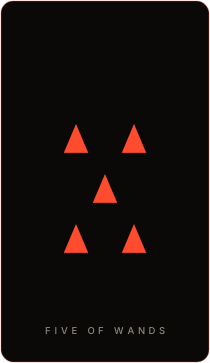
After the Four's celebration, the suit of fire does what fire does when several flames share a room: it competes. The Five of Wands is friction at close quarters — and the card's first, most useful observation is that no one in the picture is actually hurt. The wands clash; the blood stays where it belongs. This is contest, not combat, and confusing the two is where most of the damage in this card actually comes from.
Somewhere near you, several wills want the same space. The team where every voice is certain and none is senior. The family decision with five stakeholders. The field with more talent than positions. The noise is real and the exhaustion is real, but look at what the noise is made of: engagement. Nobody in this card is indifferent. Five people cared enough to pick up a stave and show up to the same patch of ground — which is, read coldly, a compliment to whatever is being fought over. Absence would be the worse sign.
The card's question is not how to win. It is what the friction is for. Sparring has a function: it pressure-tests ideas, reveals who actually believes what, and burns off the false consensus that politeness builds. A group that never scrimmages has not agreed — it has merely gone quiet, and quiet groups make their discoveries later, at higher cost. If you are in the scrum, fight cleanly and listen while you swing; the point being made against you may be the one you need.
But sparring only stays useful while it stays structured. Five people swinging with no rules and no referee produces heat and no light — the same argument re-fought weekly, the meeting that is loud on Tuesday and identical on Thursday. If the clash has stopped producing information, the move is not more force; it is form. Name the actual question. Give the contest an edge to resolve against. Fire needs a hearth to be worth anything, and this card is five flames still looking for one.
At work
The loud meeting, the rival proposals, the turf overlap. Productive while it tests ideas; waste once it repeats. Give the contest a referee and a question.
In love
Sparks as friction, not romance — the recurring argument, the two calendars, the wills unaligned. Nobody is wrong yet; nobody is listening yet either.
In you
Competing selves — five wants in one body: rest, ambition, escape, duty, appetite. The inner noise is engagement, not breakdown. Chair the meeting.
Note: Not war, not betrayal, no villain in the frame. Nobody here is bleeding. Friction, with something worth the friction underneath it.
Reversed
Five of Wands reversed meaning
The fight ending — or going underground. Ceasefire, avoidance, the argument so repeated it dies of boredom. Relief that may be resolution or merely silence. Check which before celebrating.
Reversed, the Five of Wands is what happens after the clashing stops, and the card's whole work is telling its two endings apart. In one, the friction resolved: the question got named, someone conceded something real, the wands were set down because they had finished their job. In the other, everyone simply got tired — or scared — and the contest went underground, where it does not stop, only changes costume.
Suppressed friction has a recognizable wardrobe. The meeting that is suddenly, suspiciously smooth. The topic everyone routes around like furniture. The agreement reached fast because disagreement had become socially expensive. If the loud version of this conflict was exhausting, the quiet version is worse: it moves into logistics, tone, delay, the thousand small vetoes of people who no longer argue because they no longer expect to be heard. A group that has stopped fighting has not always made peace. Sometimes it has just stopped believing the fight would change anything — and that is a far colder diagnosis.
There is also the version where the fight is simply over-rehearsed. You know the script; they know the script; the argument runs on rails and arrives nowhere, again. Reversed, the card permits something the upright never quite does: walking off the field. Not every contest deserves your stave. Some arguments are not questions in costume — they are habits, and the only winning move is to stop attending. The skill is in the exit: leave the argument, not the person; name what you are declining and why, out loud, once.
And if you are the one who has been avoiding — swallowing the objection, keeping a false peace because the true friction feels dangerous — the card has one thing to say: the objection has not dissolved. Swallowed friction ferments. The cheapest time to have a hard conversation is always now, while it is still about the thing itself and not yet about the years of not having had it.
At work
The suspiciously smooth meeting; dissent gone underground into delay and tone. Reopen the real question on purpose, or lose it to logistics.
In love
The argument on rails, or the peace kept by swallowing. Either retire the script or say the true sentence under it. Fermenting is the third option, and the worst.
In you
The inner fight gone quiet from fatigue, not resolution. Which want did you silence to get this calm? It is still voting.
Note: Not necessarily peace. The end of noise is not the end of friction — check whether anything true was said before the staves went down.